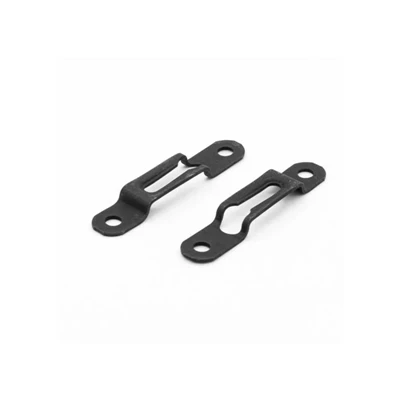

As a seasoned provider of Sheet Metal Connector, I'm often faced with inquiries about the adaptability of our products to diverse environments, especially high - temperature conditions. The use of sheet metal connectors in high - temperature settings is a topic that warrants in - depth exploration due to its implications for various industries, from industrial manufacturing to furniture construction.
Understanding the Basics of Sheet Metal Connectors
Sheet metal connectors are key components in joining and assembling sheet metal parts. They come in various shapes, sizes, and materials, each designed to meet specific application requirements. Common types include screws, nuts, bolts, clips, and brackets. These connectors play a crucial role in providing structural integrity, ease of assembly, and disassembly. Many industries rely on sheet metal connectors, such as the manufacturing of Metal Shelf Hardware, Furniture Hardware Fittings, Specialty Furniture Hardware, and Metal Storage Shelf Bracket.
Factors Affecting the Use of Sheet Metal Connectors in High - Temperature Environments
Material Properties
The material of the sheet metal connector is the most critical factor. Different metals have different melting points, thermal expansion coefficients, and oxidation resistances. For example, steel is a common material for sheet metal connectors. Mild steel has a melting point around 1370 - 1510°C, but its mechanical properties can degrade at much lower temperatures. High - temperature steels, such as stainless steel, are more resistant due to their alloy composition, which includes elements like chromium and nickel. These elements form a protective oxide layer on the surface, preventing further oxidation and maintaining the connector's strength.
Aluminum is another popular material. It has a relatively low melting point (around 660°C), which limits its use in extremely high - temperature environments. However, it has good thermal conductivity, which can be an advantage in some applications where heat dissipation is required.
Thermal Expansion
When exposed to high temperatures, all materials expand. The difference in thermal expansion coefficients between the connector and the sheet metal it is joining can cause stress. If the expansion mismatch is significant, it can lead to loosening of the connection, deformation, or even failure of the joint. For instance, if a steel connector with a different thermal expansion rate is used to join an aluminum sheet metal, the changing temperature can subject the joint to cyclical stress, ultimately weakening the connection.
Oxidation and Corrosion
High - temperature environments often accelerate oxidation and corrosion processes. Oxidation can cause the formation of a brittle oxide layer on the surface of the connector, which reduces its mechanical strength. In addition, corrosion can lead to the degradation of the material over time. For example, in a high - temperature environment with high humidity or exposure to certain chemicals, connectors made of unprotected steel can rust quickly, compromising their integrity.
Applications in High - Temperature Environments
Despite the challenges, sheet metal connectors can be used in many high - temperature applications. In industrial furnaces, for example, connectors are required to hold the furnace linings and structural components together. In these environments, high - temperature alloys are used to ensure that the connectors can withstand the extreme heat.
In the automotive industry, engines operate at high temperatures. Sheet metal connectors are used in the engine compartment to assemble various components, such as exhaust systems and heat shields. Specialized connectors made of heat - resistant materials are essential to maintain the integrity of these assemblies under high - temperature and high - stress conditions.
For Metal Storage Shelf Bracket in industrial warehouses close to industrial ovens or other heat - generating equipment, if the temperature is moderately high, proper selection of sheet metal connectors can ensure the long - term stability of the shelves.
Selecting the Right Sheet Metal Connectors for High - Temperature Use
Choose Appropriate Materials
As mentioned earlier, materials with high melting points and good oxidation resistance are preferred. High - temperature alloys, such as Inconel, are excellent choices. Inconel can withstand temperatures up to 1200°C, and it has high strength and corrosion resistance. Stainless steel, especially grades like 304 and 316, is also a common option for applications where the temperature is not extremely high but corrosion resistance is needed.
Consider Thermal Expansion Compatibility
Select connectors with thermal expansion coefficients similar to the sheet metal they will join. This minimizes the stress induced by temperature changes. In some cases, flexible connectors or expansion joints can be used to accommodate thermal expansion.
Apply Protective Coatings
Applying protective coatings can enhance the oxidation and corrosion resistance of the connectors. For example, ceramic coatings can provide a high - temperature barrier, while galvanizing can protect against corrosion in more moderate - temperature environments.
Case Studies
Let's take a look at a few real - world examples to illustrate the successful use of sheet metal connectors in high - temperature environments. In a chemical plant, Sheet Metal Connector made of stainless steel were used to assemble the ductwork in an area where the temperature could reach up to 300°C. The stainless steel connectors, combined with a special anti - oxidation coating, maintained their mechanical properties over a long period, preventing any leaks or failures in the duct system.
In the aerospace industry, high - temperature connectors made of titanium alloys are used to join various components in jet engines. Titanium offers a high strength - to - weight ratio and excellent heat resistance, making it ideal for these high - performance applications.
Conclusion
In conclusion, sheet metal connectors can indeed be used in high - temperature environments, but it requires careful material selection, consideration of thermal expansion, and protection against oxidation and corrosion. As a provider of Sheet Metal Connector, we understand the complexity of these requirements and are committed to offering the most suitable products for your high - temperature needs.
Whether you are in the manufacturing of Metal Shelf Hardware, Furniture Hardware Fittings, Specialty Furniture Hardware, or Metal Storage Shelf Bracket, we have the expertise to assist you in choosing the right connectors. If you have specific high - temperature application requirements, don't hesitate to reach out to us for a detailed discussion and professional solutions. We look forward to working with you to meet your project needs.


References
- ASM Handbook Volume 2: Properties and Selection: Nonferrous Alloys and Special - Purpose Materials
- Metals Handbook Desk Edition, Third Edition
- "High - Temperature Materials and Their Applications" by Francis R. Breedis