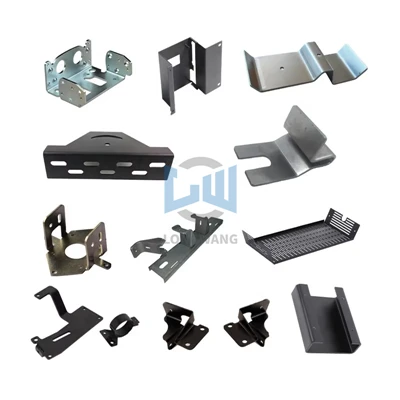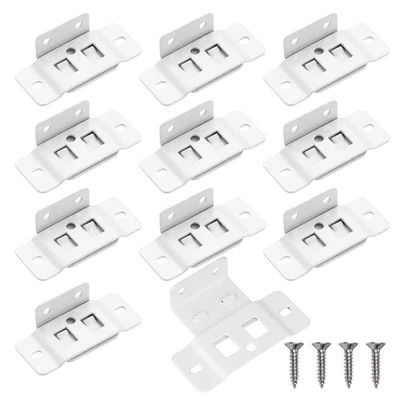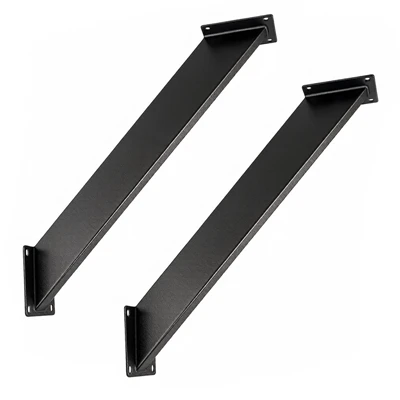

As a seasoned supplier of stamped brackets, I often encounter inquiries about their fatigue life, a critical aspect that significantly influences their performance and reliability. In this blog, we'll delve into the concept of fatigue life in stamped brackets, exploring the factors that affect it and how we, as a supplier, ensure the durability of our products.
Understanding Fatigue Life in Stamped Brackets
Fatigue life refers to the number of loading cycles a material or component can endure before failing under cyclic loading. In the context of stamped brackets, cyclic loading can arise from various sources, such as vibrations, repeated impacts, or dynamic forces during normal operation. Unlike static loading, where failure occurs immediately when the applied stress exceeds the material's strength, fatigue failure occurs gradually over time, often with little to no warning.
The mechanism of fatigue failure in stamped brackets involves the initiation and propagation of cracks. Initially, microscopic cracks form at stress concentration points, such as notches, holes, or surface imperfections. With each loading cycle, these cracks grow in size until they reach a critical length, at which point the bracket fails catastrophically. Understanding this process is crucial for predicting the fatigue life of stamped brackets and implementing effective preventive measures.
Factors Affecting the Fatigue Life of Stamped Brackets
Several factors can influence the fatigue life of stamped brackets, and it's essential to consider these variables during the design and manufacturing process. Here are some of the primary factors:
Material Properties
The choice of material plays a fundamental role in determining the fatigue life of stamped brackets. Different materials have varying fatigue strengths, which is the maximum stress a material can withstand for a given number of cycles without failing. For example, high-strength steels generally exhibit better fatigue resistance than low-carbon steels due to their higher yield strength and improved microstructure.
In addition to strength, other material properties such as ductility, toughness, and corrosion resistance can also impact fatigue life. Ductile materials are better able to absorb energy and resist crack propagation, while materials with good corrosion resistance can prevent the formation of corrosion pits, which can act as stress concentration points and initiate fatigue cracks.
Design Geometry
The design geometry of stamped brackets can significantly affect their fatigue life. Sharp corners, notches, and sudden changes in cross-section can create stress concentration points, increasing the likelihood of fatigue crack initiation. To minimize stress concentrations, it's important to use rounded corners, smooth transitions, and appropriate fillet radii in the design.
The shape and size of the bracket also play a role in its fatigue performance. Brackets with complex shapes or thin sections may be more susceptible to fatigue failure due to higher stress levels and reduced stiffness. Therefore, it's crucial to optimize the design to ensure uniform stress distribution and adequate structural integrity.
Manufacturing Process
The manufacturing process used to produce stamped brackets can have a profound impact on their fatigue life. Stamping is a common manufacturing method for producing brackets, but the quality of the stamping process can vary depending on factors such as die design, press speed, and lubrication.
Poorly designed dies or improper stamping parameters can result in surface defects, such as scratches, burrs, or cracks, which can act as stress concentration points and reduce the fatigue life of the bracket. Additionally, the residual stresses introduced during the stamping process can also affect fatigue performance. To minimize these effects, it's important to use high-quality dies, optimize the stamping parameters, and perform post-stamping processes such as heat treatment or shot peening to relieve residual stresses and improve the surface finish.
Loading Conditions
The loading conditions to which the stamped bracket is subjected can also influence its fatigue life. Factors such as the magnitude, frequency, and type of loading (e.g., tensile, compressive, or shear) can all affect the fatigue performance of the bracket.
For example, brackets subjected to high-stress levels or cyclic loading at high frequencies are more likely to experience fatigue failure than those subjected to low-stress levels or static loading. Additionally, the presence of dynamic loads, such as vibrations or impacts, can increase the stress levels and accelerate the fatigue crack growth process. Therefore, it's important to accurately characterize the loading conditions and ensure that the bracket is designed to withstand these loads.
Ensuring the Fatigue Life of Our Stamped Brackets
As a supplier of stamped brackets, we take several measures to ensure the fatigue life of our products. Here's how we approach this critical aspect:
Material Selection
We carefully select the materials for our stamped brackets based on the specific application requirements and the expected loading conditions. We work closely with our material suppliers to source high-quality materials with excellent fatigue resistance and other desirable properties.
In addition to traditional materials such as steel and aluminum, we also offer a range of specialty materials, such as stainless steel and titanium, which provide enhanced corrosion resistance and high strength-to-weight ratios. Our team of engineers can help you choose the most suitable material for your application to ensure optimal performance and durability.
Design Optimization
Our experienced design team uses advanced computer-aided design (CAD) and finite element analysis (FEA) software to optimize the design of our stamped brackets. We analyze the stress distribution and fatigue performance of the bracket under various loading conditions to identify potential areas of concern and make design modifications as needed.
By using rounded corners, smooth transitions, and appropriate fillet radii, we minimize stress concentrations and improve the fatigue resistance of the bracket. We also pay close attention to the overall shape and size of the bracket to ensure uniform stress distribution and adequate structural integrity.
Quality Manufacturing
We have a state-of-the-art manufacturing facility equipped with the latest stamping equipment and technology. Our highly skilled operators and technicians follow strict quality control procedures to ensure that every stamped bracket we produce meets the highest standards of quality and performance.


We use high-quality dies and optimize the stamping parameters to minimize surface defects and residual stresses. After stamping, we perform a series of post-processing operations, such as heat treatment, shot peening, and surface finishing, to improve the mechanical properties and surface quality of the bracket.
Testing and Validation
Before releasing our stamped brackets to the market, we subject them to rigorous testing and validation to ensure their fatigue life meets or exceeds the customer's requirements. We use a variety of testing methods, including fatigue testing, static testing, and non-destructive testing, to evaluate the performance and durability of the bracket.
Our fatigue testing equipment allows us to simulate real-world loading conditions and accurately measure the number of cycles the bracket can withstand before failing. Based on the test results, we can make any necessary adjustments to the design or manufacturing process to improve the fatigue life of the bracket.
Our Product Range
In addition to stamped brackets, we also offer a wide range of other metal stamping parts, including Stainless Steel Fixing Plates, Metal Buckles and Fasteners, Metal Stamped Clip, Stamped Gasket, and Metal Connector Plate. These products are manufactured using the same high-quality materials and advanced manufacturing processes as our stamped brackets, ensuring excellent performance and durability.
Contact Us for Procurement and Negotiation
If you're in need of high-quality stamped brackets or other metal stamping parts, we'd be delighted to work with you. Our team of experts can provide you with customized solutions tailored to your specific requirements, ensuring that you get the best products at competitive prices.
Contact us today to discuss your procurement needs and start a negotiation. We're committed to providing you with exceptional service and support throughout the entire process, from product design and manufacturing to delivery and after-sales service.
References
- Fatigue of Materials, Suresh, S. (2004).
- Metal Forming: Theory and Practice, Altan, T., et al. (2017).
- Mechanical Behavior of Materials, An Introduction to Engineering Metallurgy, Dieter, G. E. (1986).